
The Office Isn't Dead. The Undifferentiated Office Is.
The office is not dead. But a generic office with no defensible reason to be chosen is in trouble. Washington's Prime vacancy reached 8.3% in Q3 2026 while private leasing strengthened and second-generation government space remained a major source of vacancy. This is selection, not a universal recovery. Buildings win when they reduce friction: access, efficient space, reliable systems, credible ownership and an environment that supports why people are gathering. A new amenity cannot substitute for a clear product strategy.
“The office is dead” was always too simple. So is “the office is back.”
Companies still lease offices. The more important change is that they no longer need every office building equally.
CBRE reported that U.S. office leasing continued to normalize in 2026, while Prime vacancy declined and technology companies made longer-term commitments. In Washington, Prime vacancy reached 8.3 percent in the third quarter, and scarcity at the top began pushing tenants into other Class A properties. Private-sector leasing was on pace to exceed its ten-year historical average, even as second-generation government space remained a significant source of vacancy.
This is not a universal recovery. It is selection.
An undifferentiated building has no compelling answer to a basic tenant question: why here instead of the alternatives? “We have a fitness center” is not an answer when five competing buildings do too. Neither is a newly painted lobby if elevators, air quality, security, floor efficiency or landlord execution remain uncertain.
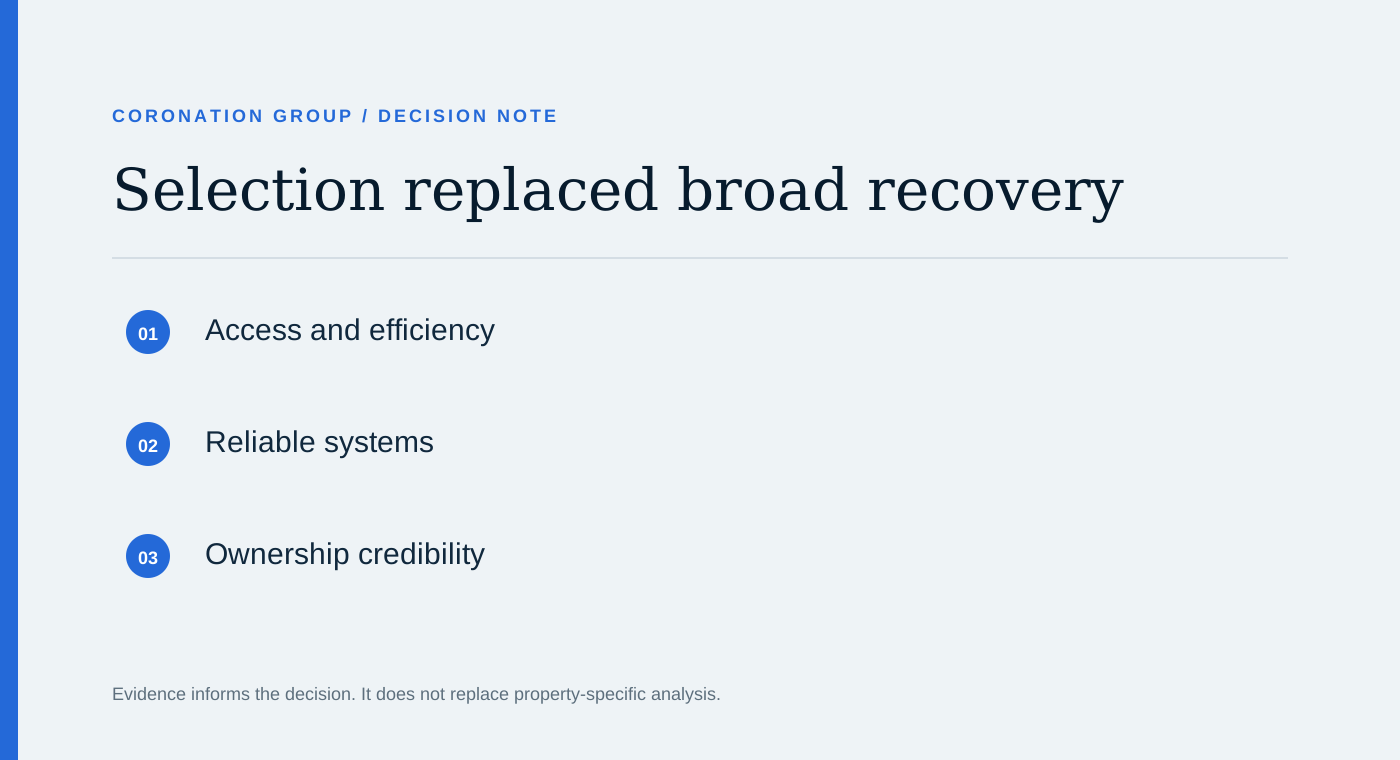
The buildings winning demand tend to reduce friction. They are easier to reach, easier to enter, easier to configure and easier to trust. Their systems work. Their ownership can fund improvements. The surrounding environment supports the workday. Employees do not need a brochure to understand why the office is useful.
That last point matters. The purpose of the office is no longer self-evident to every worker, so real estate has to support a clearer organizational purpose: collaboration, client service, secure work, training, culture or access to specialized infrastructure. A building cannot create that purpose, but it can either enable it or make it harder.
This is why amenity spending without product strategy often disappoints. Amenities are effective when they serve a defined tenant and operating model. Otherwise they become another cost embedded in rent.
Owners of challenged properties face three choices. Differentiate through improvements the market will actually pay for. Reprice the building honestly for a different competitive set. Or pursue a different use where the physical and financial facts support it. Waiting for broad demand to lift every asset is also a choice—usually an expensive one.
Occupiers should be equally careful. A discounted lease can look attractive until weak ownership, unresolved capital work or poor employee adoption turns the bargain into operating friction. The comparison should include the building's ability to perform throughout the lease, not simply the concession package at signing.
The office is not disappearing. It is becoming less forgiving of generic product.
The future belongs neither to every office nor only to Trophy towers. It belongs to buildings with a specific reason to be chosen—and the operational credibility to deliver it.