
Lease, Own, or Preserve Flexibility? A Decision Framework for Today's Occupiers
Lease versus own is not a rent-versus-mortgage calculation. It is a decision about operating horizon, capital allocation, control, flexibility and where risk should sit. Ownership may fit a stable, specialized, long-duration requirement. Leasing may protect capital and adaptability. The useful model tests multiple holding periods, financing assumptions, capital costs and exit values—and makes the opportunity cost visible. The answer should never be “ownership always wins.” It should be “this structure best supports this business under these conditions.”

Lease-versus-own analyses often begin with monthly occupancy cost. That is understandable—and incomplete.
Real estate is not only a line item. It affects capital availability, operating control, expansion capacity, balance-sheet flexibility and the ease with which a business can change course. The cheaper option in year one can become the more expensive strategic commitment.
The decision should begin with the operating horizon. A business with a stable location requirement, specialized improvements and a long expected occupancy may have a stronger ownership case. A growing company with uncertain headcount, evolving service territory or a possible transaction may place greater value on flexibility.
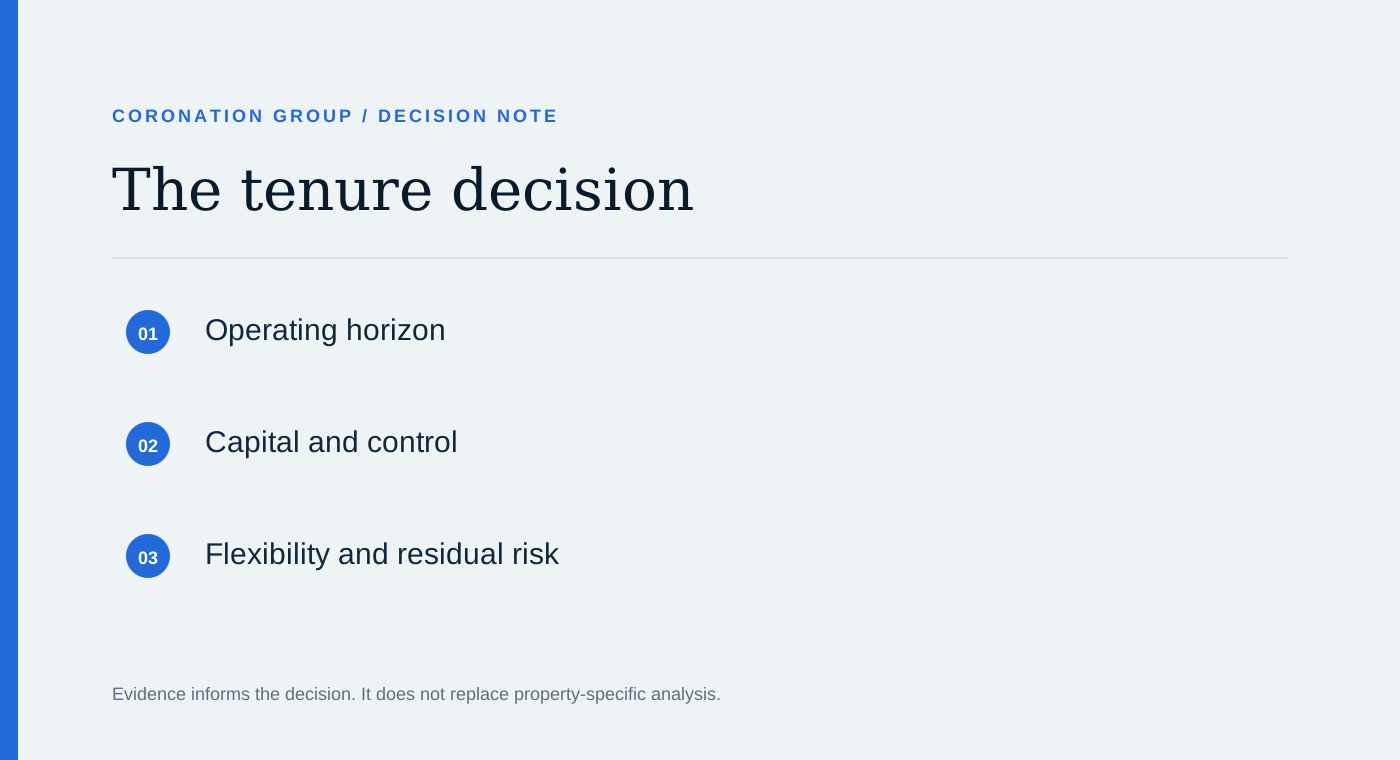
Next comes capital. Ownership requires equity, financing costs, reserves and closing expenses. That capital has an opportunity cost: money committed to a building cannot simultaneously fund hiring, equipment, acquisitions or working capital. Leasing generally requires less capital upfront, but it exposes the occupier to renewal economics and provides no residual property value.
Control is the third variable. Owners can determine maintenance standards, improvements, signage, operating hours and long-term capital work, subject to law and financing requirements. Tenants negotiate for those rights and may still depend on another party's execution.
Risk must then be made explicit. Ownership transfers market value, major repairs, environmental exposure and disposition risk to the occupier. Leasing transfers some property risk to the landlord but introduces lease-expiration, relocation and landlord-performance risk. Neither structure eliminates uncertainty; each assigns it differently.
The financial model should reflect that reality. Compare rent, escalations, operating expenses and concessions against debt service, taxes, insurance, maintenance, capital expenditures and the eventual sale. Use more than one holding period and more than one exit value. A single optimistic appreciation assumption can predetermine the answer.
The U.S. Small Business Administration makes the broad tradeoff plainly: leasing generally requires less cash or credit upfront, while ownership can create a balance-sheet asset and may have a lower lifetime cost. It also emphasizes the full cost of ownership beyond the purchase price. Tax and accounting consequences require advice specific to the occupier; they should not be reduced to generic claims.
Finally, test the alternatives that sit between a conventional lease and a conventional purchase. Expansion rights, termination options, purchase options, rights of first offer, shorter initial terms, phased occupancy, seller financing and condominium ownership can preserve flexibility without abandoning control.
The correct answer is rarely “leasing is better” or “ownership builds wealth.” It is conditional: better for this organization, at this property, under these assumptions, over this period.
A useful analysis does not produce certainty. It shows which assumptions control the result—and what the business gives up when it chooses.