
When the Federal Tenant Changes Course: Reassessing Office Risk Across the Washington Region
A federal return-to-office directive is not the same thing as new federal leasing demand. Agencies can densify owned buildings, consolidate, extend temporarily or change requirements before procurement reaches the market. GAO reported that DOD alone managed about 35 million square feet in the National Capital Region, including 10.2 million leased square feet. For owners and investors, the correct response is exposure mapping—not headline trading. Review each lease, mission, expiration, replacement-tenant pool and capital requirement independently.

Federal occupancy is not merely another demand category in Washington commercial real estate. It influences entire submarkets, building specifications, security investments, transit patterns and private-sector confidence. That is precisely why owners should avoid treating any single federal directive as a complete forecast.
The federal footprint moves through several different mechanisms: agency headcount, owned-space utilization, lease expirations, consolidation mandates, appropriations, security requirements and procurement timelines. These mechanisms do not move together or at the same speed.
The Department of Defense illustrates the scale and complexity. The U.S. Government Accountability Office reported that DOD managed roughly 35 million square feet of office space in the National Capital Region as of March 2025. About 24.7 million square feet was owned and 10.2 million square feet was leased, at an annual cost of approximately $318 million. GAO also found gaps in lease inventories and occupancy information—exactly the information required for confident consolidation decisions.
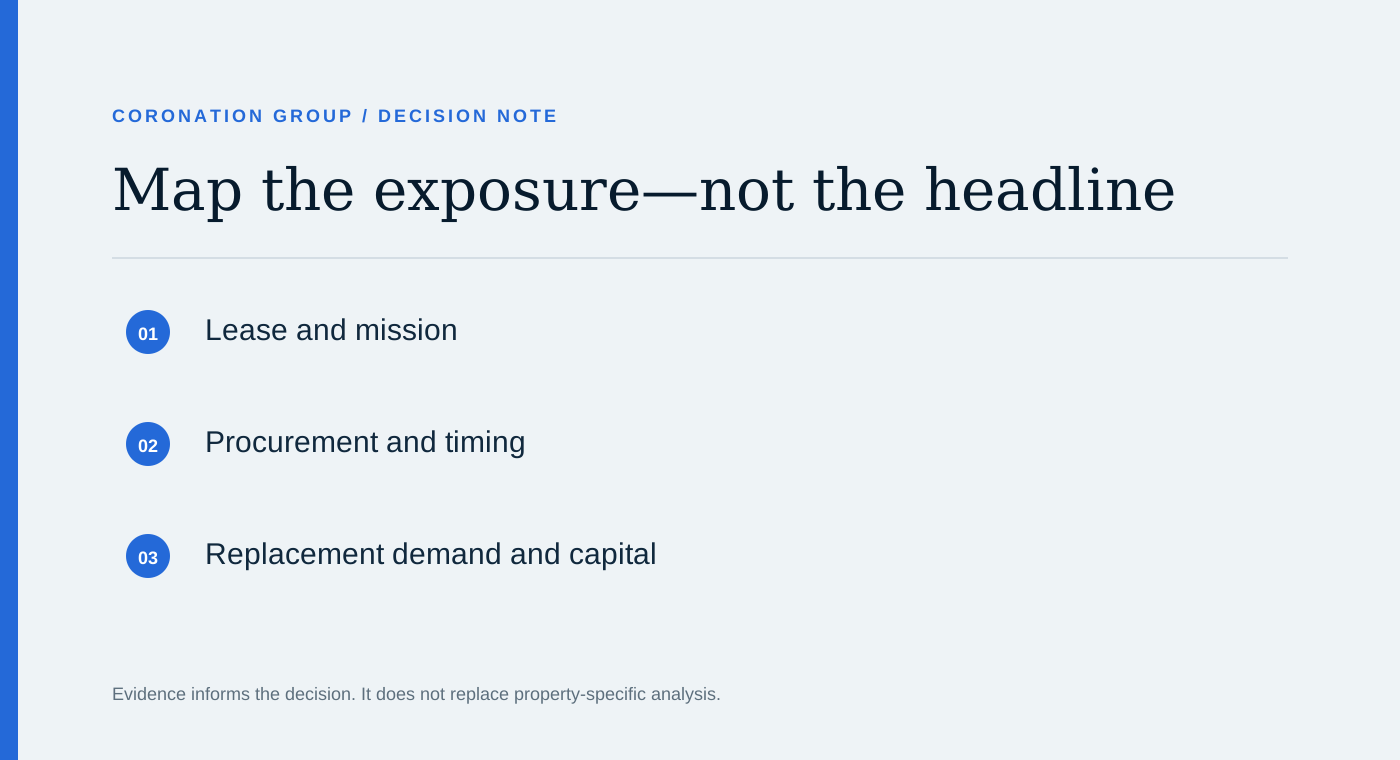
For property owners, three distinctions matter.
The first is attendance versus space demand. More employees reporting to an office can increase utilization without producing a new lease. Agencies may absorb workers into owned buildings, densify existing space or extend leases temporarily while a longer decision is made.
The second is stated policy versus executed procurement. A strategic announcement can alter sentiment immediately, but federal leasing requires budgets, approvals, specifications and competition. The real estate effect appears through signed actions, not headlines alone.
The third is federal exposure versus federal dependence. A building with a diversified rent roll and specifications attractive to private tenants faces a different risk from a specialized asset whose location, security buildout or floor configuration narrows the replacement-tenant pool.
A disciplined review therefore starts lease by lease. What is the expiration profile? Which tenants have mission-specific reasons to remain? Is the rent above or below current alternatives? What capital would a renewal require? If the agency leaves, can the space be divided, repositioned or marketed outside the federal ecosystem? How much downtime and conversion cost should be carried in the valuation?
The same analysis applies at the submarket level. Federal contraction can reduce daytime population, affect retail demand and change the logic of nearby parking and transit. Conversely, a smaller federal footprint may create opportunities for private tenants seeking large blocks—provided the product meets their expectations.
The Washington region has always been shaped by public-sector decisions. The mistake is assuming the federal government is a single tenant making a single decision. It is a collection of agencies, missions, appropriations and buildings moving through different clocks.
The prudent response is neither panic nor complacency. It is exposure mapping: identify where federal behavior enters the property's income, operations, capital needs and exit value, then underwrite each channel separately.